.png?width=300&height=100&name=Copy%20of%20Rise%20Beyond%20Logo%2012.31.24%20(300%20x%20100%20px).png "Rise Beyond Fly Fishing Co. logo featuring a cowboy riding a large trout, holding a fishing rod in one hand and a camera in the other, with stylized text in a rugged, outdoor-themed font")
.png)
The Blue River below Green Mountain Reservoir is a true winter tailwater. Cold, clear releases, steady flows, and trout that expect you to get everything right. This stretch does not give away free eats, but if you slow down and fish with intent, it will absolutely produce.
Updated: March 4, 2026
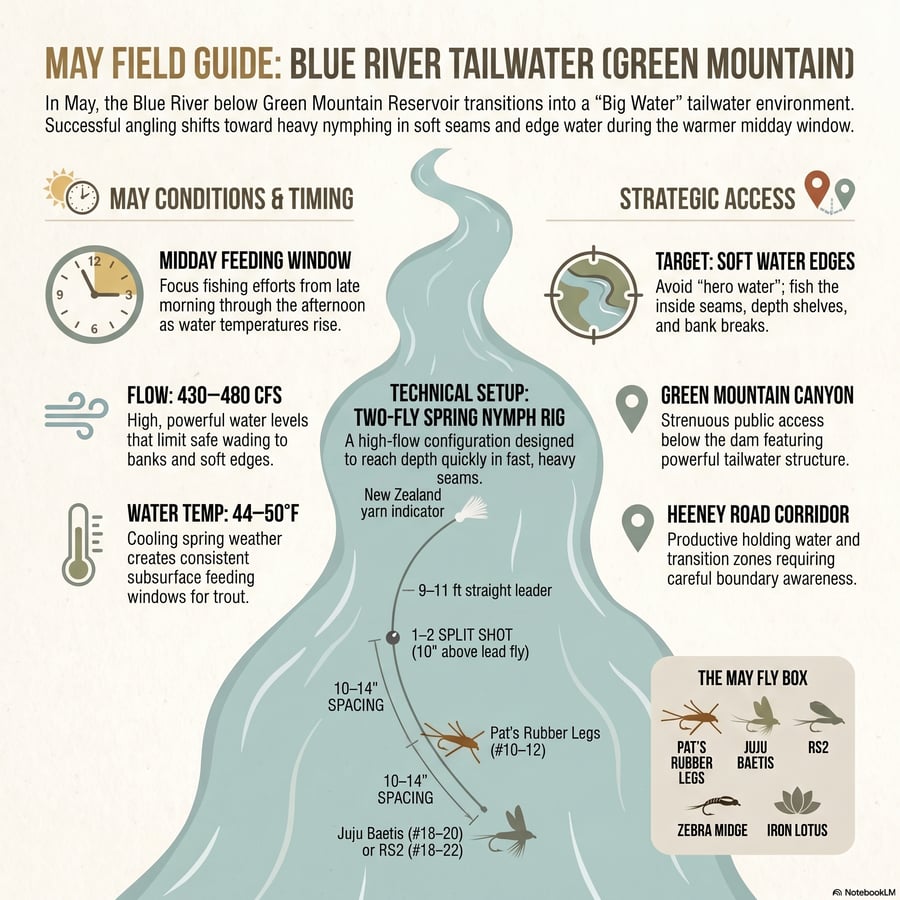
The Blue below Green Mountain is fishing, but it is not casual water right now. Recent flow reports show the river around the mid-400 CFS range, with a 10-day average near 478 CFS, which puts this stretch well above ideal walk-and-wade comfort and into serious tailwater territory.
The upside is that higher releases can improve the canyon fishing, especially when fish have room to spread into seams, banks, and softer edges. The tradeoff is safety and access. This is big, powerful water below the dam, and wading gets dangerous once flows push over 300 CFS. Angler’s Covey notes that walk-and-wade fishing is best between 150 and 300 CFS, while flows over 300 CFS make wading dangerous.
Listen to the Audio Overview
Conditions Summary
%20(3).png?width=500&height=109&name=Guide%20Rating%20(800%20x%20175%20px)%20(3).png)
(Real-time USGS data from site USGS-09057500)
| Category | Status | What It Means |
|---|---|---|
| Flow | 430–480 CFS | Big water, limited safe wading |
| Water Temp | 44–50°F | Stronger feeding windows, especially midday |
| Air Temp | 45–60°F | Cool spring weather keeps windows controlled |
| Clarity | 3+ feet | Fishable, but presentation still matters |
| Wind | 7–15 mph | Manageable, but tough in canyon pockets |
| Wading | Difficult | High flows make crossing and deep seams risky |
| Crowds | Low to Medium | Harder access keeps some pressure off |
| Access | Limited | Canyon access is strenuous and mostly public only below dam |
| Vibe | Big-water tailwater window | Good fishing, but not forgiving or easy |
| Float | Technical | Only for experienced private boaters at higher flows |
| Dry Outlook | Medium–High | BWOs and caddis windows are real |
| Streamer | Medium | Worth fishing through banks and soft edges |
| Nymphing | High | Most consistent method, but rig for depth and power |
Weather
Expect hard overnight freezes and limited early sunlight. Calm, sunny afternoons fish best. Wind shuts down feeding quickly on this stretch.
Top Flies in Your Box This Week
| Priority | Fly + Size | Role & When to Use |
|---|---|---|
| ⭐⭐⭐⭐⭐ | Tungsten Juju Baetis #18–20 | Core baetis nymph for seams and shelves |
| ⭐⭐⭐⭐⭐ | Split Case BWO #16–18 | Strong hatch match during BWO windows |
| ⭐⭐⭐⭐ | Pat’s Rubber Legs #10–12 | Big anchor fly in heavier water |
| ⭐⭐⭐⭐ | Darth Baetis #18–22 | Technical baetis option in clear water |
| ⭐⭐⭐⭐ | Grey Dun RS2 #18–22 | Suspended fish during softer feeding windows |
| ⭐⭐⭐ | K’s Latex Caddis #16–18 | Early caddis activity and edge water |
| ⭐⭐⭐ | UV Midge Black #18–22 | Deep dropper in technical seams |
| ⭐⭐⭐ | TDJ Golden Stone #14–18 | Larger profile for powerful runs |
| ⭐⭐ | Pegged Egg | Situational attractor below the dam |
| ⭐⭐ | Elk Hair Caddis #14–18 | Dry option during afternoon caddis windows |
Pro Rig for This Section
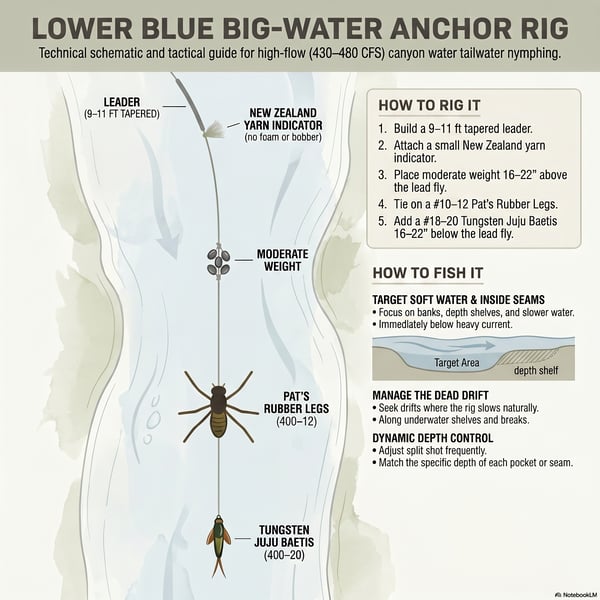
Lower Blue Big-Water Anchor Rig
- Indicator: Medium yarn or low-profile high-vis indicator
- Lead Fly: Pat’s Rubber Legs #10–12
- Dropper: Tungsten Juju Baetis #18–20
- Weight: Moderate, adjusted constantly by seam depth
- Spacing: 16–22 inches
- Leader Length: 9–11 ft
- Target Water: Banks, soft inside seams, depth shelves, and slower water below heavy current
Blue River Hatch Chart – March
| Bug Type | Size | Notes |
|---|---|---|
| Midges | 20 to 26 | Dominant forage in cold water |
| Baetis | 18 to 20 | Increasing during mild afternoons |
| Leeches | 8 to 12 | Trigger option in deeper pools |
Access Points
Below Green Mountain Dam | 📍 Locals Rating ⭐️⭐️⭐️⭐️⭐️ 5.0
Consistent tailwater access with broad winter seams.
Heeney Reach | 📍 Locals Rating ⭐️⭐️⭐️⭐️ 4.5
Defined runs with low winter pressure.
Blue Valley Ranch Access | 📍 Locals Rating ⭐️⭐️⭐️⭐️ 4.0
Long seams and varied winter structure.
Trough Road Pull-Offs | 📍 Locals Rating ⭐️⭐️⭐️ 3.5
Productive water requiring careful access.
Lower Blue Valley Stretch | 📍 Locals Rating ⭐️⭐️⭐️ 3.0
Less consistent holding water.
Stop Here After the River Angry James Brewing Co.
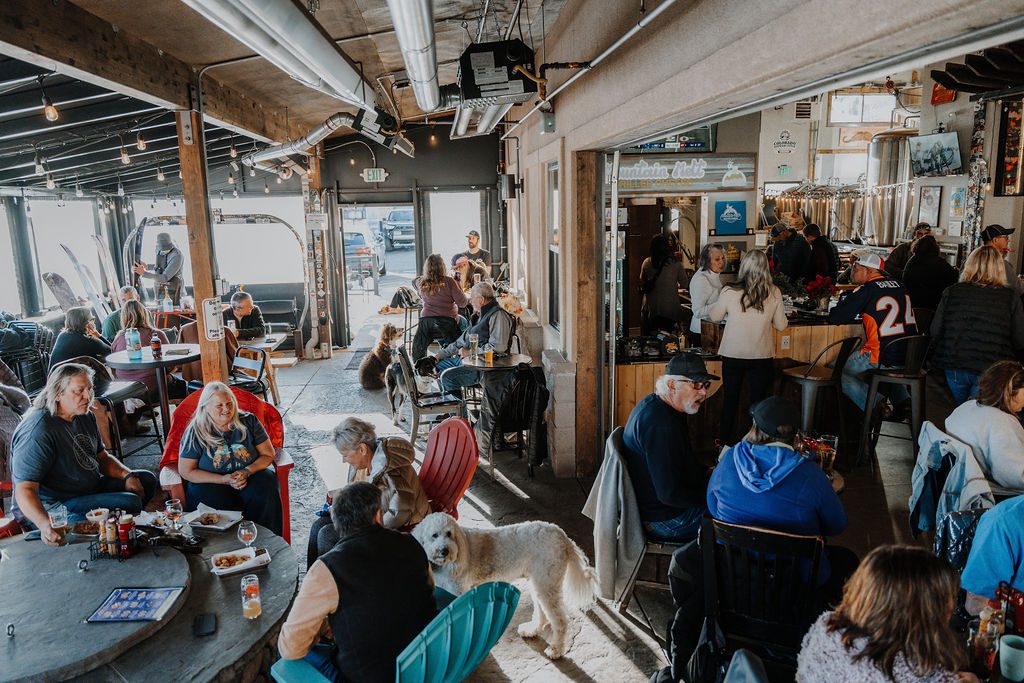
Angry James Brewing Co. (Silverthorne)
A warm, relaxed local brewery perfect after a day in the cold canyon. Expect big mountain vibes, community tables, and comfort-focused après energy.
What to order: The Resolute IPA and the rotating food truck’s signature warm dish.
Local Regulations and Notes
- Watch for changing dam release flows before entering canyon water
- Shelf ice can form along shaded edges
- Wading is technical; use caution on slick canyon rock
- Keep distance from other anglers due to narrow channel geometry
Companion Article
Colorado Winter Trout Feeding Behavior in Clear, Low-Flow Rivers
FAQ
Is the Blue River Below Green Mountain Good for Fly Fishing in Winter?
Yes. The Blue River below Green Mountain Reservoir offers consistent winter trout fishing for anglers willing to fish slowly and precisely. Feeding windows are short but reliable during calm midday conditions.
How Technical Is the Blue River in Winter?
Moderately to highly technical. Trout are selective, and success depends on depth control, clean drifts, and small flies rather than aggressive tactics.
Q: Is the Blue River below Green Mountain Reservoir good in winter?
A: Yes. Stable tailwater flows make it one of the most reliable cold-season fisheries in Colorado.
Q: What flies catch the most fish here?
A: Small midges, baetis nymphs, and subtle emergers are the bread and butter.
Q: Do streamers work?
A: Occasionally. Small leeches can move fish in deep slots on overcast days.
Q: How technical is this section?
A: Very. Clear water and slow current require stealth and precision.
Q: What is the best time of day?
A: Midday, when sunlight and slight temperature bumps activate midges.
Q: Can I sight-fish?
A: Yes in many sections, but trout spook easily in winter clarity.
Q: Is the Blue River below Green Mountain good in winter?
A: Yes. It is one of the most consistent and least crowded winter tailwaters in Colorado.
Q: How technical is this stretch compared to Dillon Dam?
A: Slightly less pressured, but still technical. Depth control and drift quality matter.
Q: Are dry flies an option right now?
A: Rarely. Subsurface midge patterns dominate winter success.
Q: What leader and tippet setup works best?
A: Long leaders with 5X to the lead fly and 6X to the midge dropper.
Q: Do scuds matter here in winter?
A: Yes. Scuds are an important secondary food source in this tailwater.
Q: When does the bite shut down?
A: Typically mid-afternoon once shadows and colder air settle into the canyon.
The Blue River below Green Mountain Reservoir is a true winter tailwater. Cold, clear releases, steady flows, and trout that expect you to get everything right. This stretch does not give away free eats, but if you slow down and fish with intent, it will absolutely produce.
.png?width=960&height=960&name=unnamed%20(93).png)
Updated: March 4, 2026
The Blue below Green Mountain is classic late winter tailwater right now. Cold mornings. Clear water. Fish holding deep in structured seams and slower transition runs.
This stretch is bigger water than the Dillon section and fish sit heavier. Depth control matters more than fly swapping. Midday warming helps, but this remains a technical presentation river.
Listen to the Audio Overview
Conditions Summary
(Real-time USGS data from site USGS-09057500)
- Flow: 215 CFS. Stable tailwater release creating defined seams and deeper structured runs.
- Water Temperature: 37 °F
- Air Temperature: 43 °F
- Wind: 6 to 15 mph
- Clarity: Clear
- Crowds: Low
- Primary Hatch: Midges with increasing Baetis
- Best Window: 11 a.m. to 3 p.m.
- Overall Rating: Technical but consistent early spring tailwater
Weather
Expect hard overnight freezes and limited early sunlight. Calm, sunny afternoons fish best. Wind shuts down feeding quickly on this stretch.
Top Flies in Your Box This Week
Primary Method: Structured Tailwater Nymphing
Primary Hatch: Midges
- Top Secret Midge Olive 22 to 24: Fish deep in slower transition seams.
- Black Beauty Sparse Thread 22 to 24: Clear pressured runs.
- Root Beer Midge UV Rib 20 to 22: Effective in moderate depth lanes.
- CDC RS2 Gray 20 to 22: Fish slightly above bottom during feeding lift.
- Mercury Midge Slim Profile 20 to 22: Clean drift through defined walking speed seams.
Secondary Hatch: Baetis
- JuJu Baetis Olive 18 to 20: Fish near bottom in mild afternoon windows.
- Barr’s Graphic BWO Nymph 18 to 20: Clean drift through deeper seams.
- Film Critic BWO Emerger 18 to 20: Raise slightly when fish tilt upward.
Attractor and Structure Trigger
- Mini Pine Squirrel Leech Olive 10 to 12: Slow strip in deeper pools.
- Micro Sculpzilla Natural 8 to 10: Target structure edges and low light.
Pro Rig of the Week: Green Mountain Deep Seam Rig
- Indicator: Small New Zealand style yarn
- Lead Fly: JuJu Baetis 18
- Dropper: Top Secret Midge 22
- Weight: One moderate split shot 10 to 12 inches above lead fly
- Target Water: Deeper structured runs and defined transition seams
If fish are glued to bottom, flip the midge to the point.
Blue River Hatch Chart – March
| Bug Type | Size | Notes |
|---|---|---|
| Midges | 20 to 26 | Dominant forage in cold water |
| Baetis | 18 to 20 | Increasing during mild afternoons |
| Leeches | 8 to 12 | Trigger option in deeper pools |
Download the Blue River Hatch Chart.
Access Points
Below Green Mountain Dam | 📍 Locals Rating ⭐️⭐️⭐️⭐️⭐️ 5.0
Consistent tailwater access with broad winter seams.
Heeney Reach | 📍 Locals Rating ⭐️⭐️⭐️⭐️ 4.5
Defined runs with low winter pressure.
Blue Valley Ranch Access | 📍 Locals Rating ⭐️⭐️⭐️⭐️ 4.0
Long seams and varied winter structure.
Trough Road Pull-Offs | 📍 Locals Rating ⭐️⭐️⭐️ 3.5
Productive water requiring careful access.
Lower Blue Valley Stretch | 📍 Locals Rating ⭐️⭐️⭐️ 3.0
Less consistent holding water.
Stop Here After the River Angry James Brewing Co.
Angry James Brewing Co. (Silverthorne)
A warm, relaxed local brewery perfect after a day in the cold canyon. Expect big mountain vibes, community tables, and comfort-focused après energy.
What to order: The Resolute IPA and the rotating food truck’s signature warm dish.
Local Regulations and Notes
- Watch for changing dam release flows before entering canyon water
- Shelf ice can form along shaded edges
- Wading is technical; use caution on slick canyon rock
- Keep distance from other anglers due to narrow channel geometry
Companion Article
Colorado Winter Trout Feeding Behavior in Clear, Low-Flow Rivers
FAQ
Is the Blue River Below Green Mountain Good for Fly Fishing in Winter?
Yes. The Blue River below Green Mountain Reservoir offers consistent winter trout fishing for anglers willing to fish slowly and precisely. Feeding windows are short but reliable during calm midday conditions.
How Technical Is the Blue River in Winter?
Moderately to highly technical. Trout are selective, and success depends on depth control, clean drifts, and small flies rather than aggressive tactics.
Q: Is the Blue River below Green Mountain Reservoir good in winter?
A: Yes. Stable tailwater flows make it one of the most reliable cold-season fisheries in Colorado.
Q: What flies catch the most fish here?
A: Small midges, baetis nymphs, and subtle emergers are the bread and butter.
Q: Do streamers work?
A: Occasionally. Small leeches can move fish in deep slots on overcast days.
Q: How technical is this section?
A: Very. Clear water and slow current require stealth and precision.
Q: What is the best time of day?
A: Midday, when sunlight and slight temperature bumps activate midges.
Q: Can I sight-fish?
A: Yes in many sections, but trout spook easily in winter clarity.
Q: Is the Blue River below Green Mountain good in winter?
A: Yes. It is one of the most consistent and least crowded winter tailwaters in Colorado.
Q: How technical is this stretch compared to Dillon Dam?
A: Slightly less pressured, but still technical. Depth control and drift quality matter.
Q: Are dry flies an option right now?
A: Rarely. Subsurface midge patterns dominate winter success.
Q: What leader and tippet setup works best?
A: Long leaders with 5X to the lead fly and 6X to the midge dropper.
Q: Do scuds matter here in winter?
A: Yes. Scuds are an important secondary food source in this tailwater.
Q: When does the bite shut down?
A: Typically mid-afternoon once shadows and colder air settle into the canyon.