.png?width=300&height=100&name=Copy%20of%20Rise%20Beyond%20Logo%2012.31.24%20(300%20x%20100%20px).png "Rise Beyond Fly Fishing Co. logo featuring a cowboy riding a large trout, holding a fishing rod in one hand and a camera in the other, with stylized text in a rugged, outdoor-themed font")
.png)
The Arkansas River is deep into its winter transition, and like the Colorado, each section behaves differently depending on elevation, gradient, canyon structure, and overnight temperatures. From the cold oxygen-rich pocket water above Leadville, to the more forgiving mid-elevation freestone through Buena Vista and Salida, down to the wider, warmer water near Cañon City, the Arkansas is showing its classic split personality this time of year.
Jump to Upper Arkansas Report
Jump to Middle Arkansas Report
Jump to Lower Arkansas Report
Updated: May 6th, 2026
The Arkansas in winter is a study in contrast. The Upper is technical and narrow, the Middle broad and structured, and the Lower warmer and more forgiving. Treat them the same and you will miss fish. Fish them intentionally and the Ark still rewards discipline.
This is not a roam and guess river right now. Pick the section that matches your time and skill level. Focus on depth first, presentation second, and fly changes last. The bite lives in a short midday window across all three stretches.
Listen to the Audio Overview
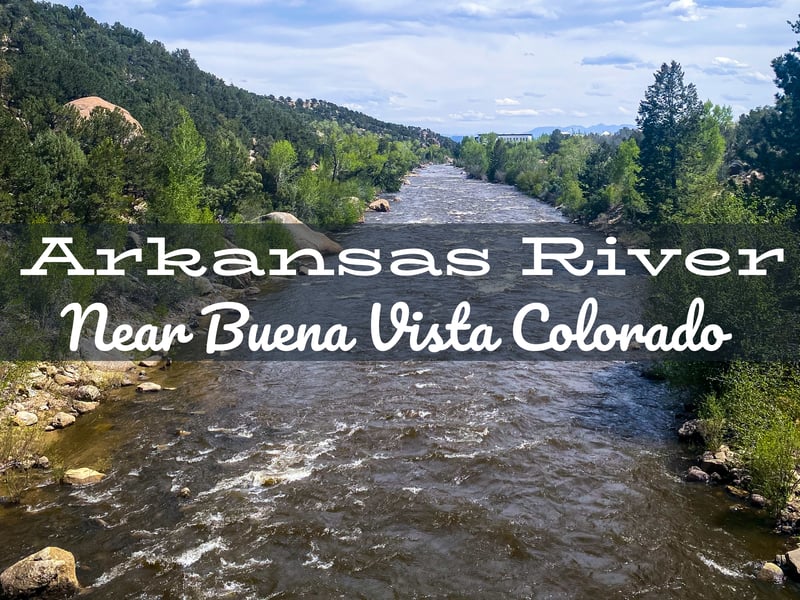
Arkansas River Fly Fishing Report Near Buena Vista
%20(4).png?width=600&height=131&name=Guide%20Rating%20(800%20x%20175%20px)%20(4).png)
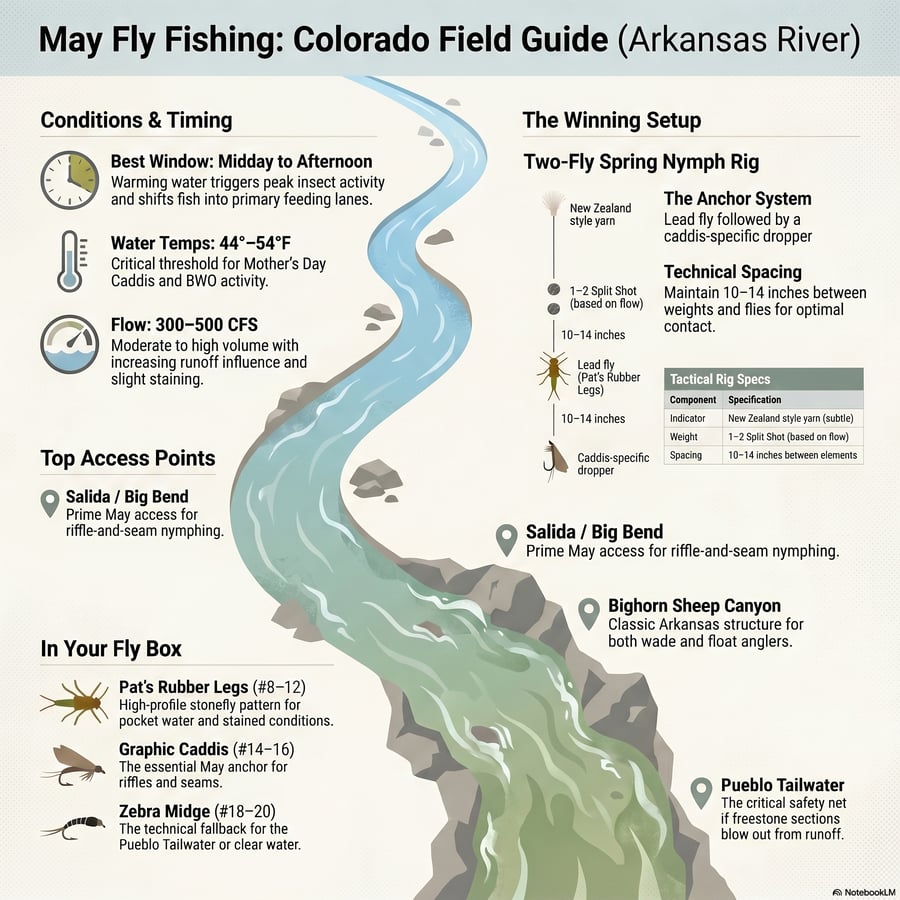
The upper Arkansas near Buena Vista and Salida is still very fishable, especially when clarity holds and flows stay manageable. This section is your best choice if you want classic freestone structure, walk-and-wade options, and a real shot at caddis activity before runoff gets loud.
The window is good, but not guaranteed. Warm afternoons can improve bug activity and push fish into feeding lanes, but they can also bump flows and soften clarity. Fish the warmer part of the day, but keep an eye on the gauge before committing.
Top Flies
Primary Method: Nymphing | Primary Hatch: Midges
-
Priority Fly + Size Role & When to Use ⭐⭐⭐⭐⭐ Graphic Caddis #14–16 Caddis anchor for riffles and seams ⭐⭐⭐⭐⭐ Frenchie #14–16 Confidence nymph in mixed water ⭐⭐⭐⭐ Pat’s Rubber Legs #8–10 Big profile for pocket water and stain ⭐⭐⭐⭐ Elk Hair Caddis #14–16 Dry option during afternoon activity ⭐⭐⭐⭐ Duracell Jig #14–16 Gets down fast in deeper riffles ⭐⭐⭐ Barr’s Emerger #16–18 BWO windows and soft seams ⭐⭐⭐ Rainbow Warrior #16–18 Visibility bump when clarity shifts ⭐⭐⭐ Flashback Pheasant Tail #14–16 Natural mayfly profile with signal ⭐⭐ Thin Mint #6–8 Streamer option if flows bump ⭐⭐ Zebra Midge #18–20 Clear-water fallback
Pro Rig of the Week of the Month
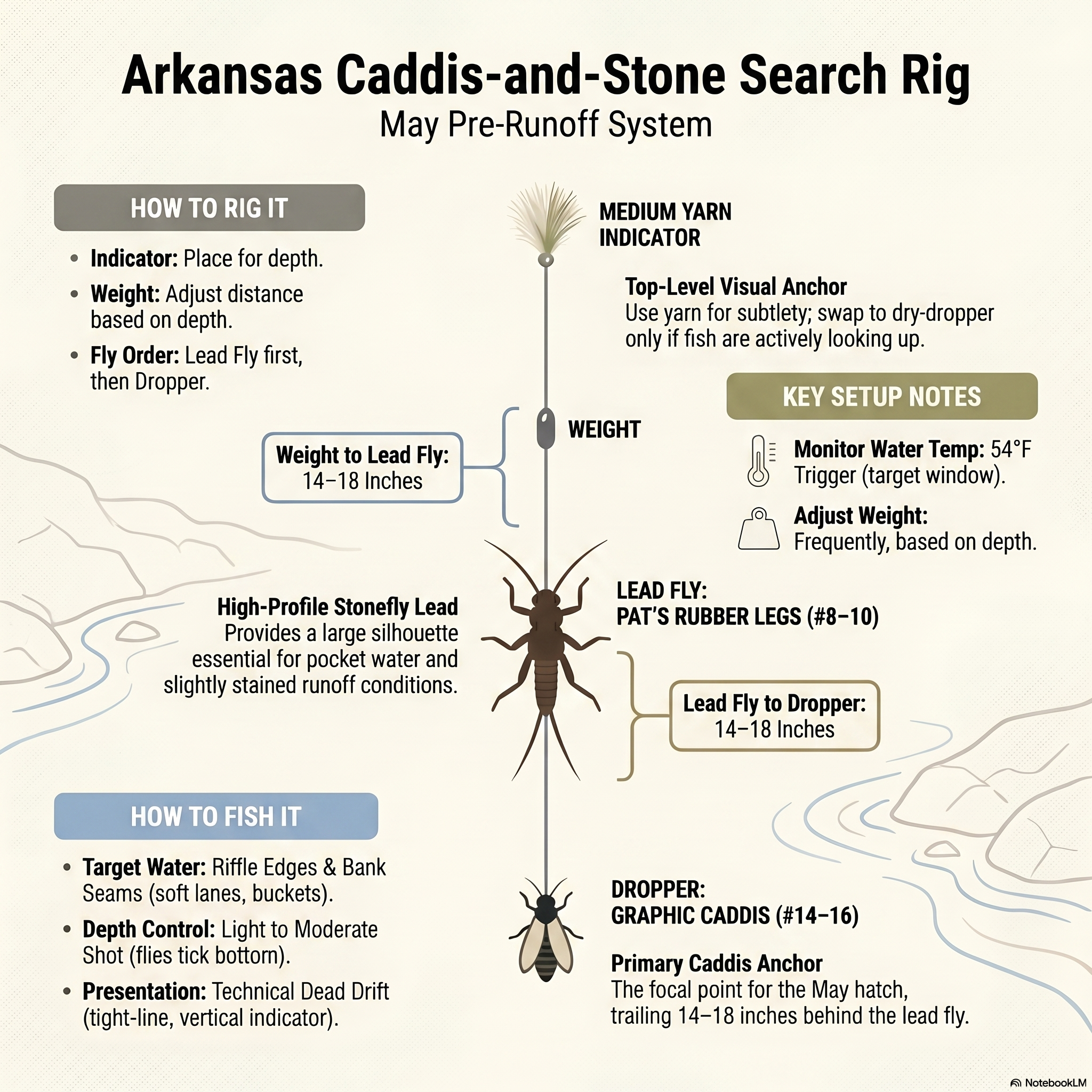
Upper Arkansas Caddis Search Rig
- Indicator: Medium yarn or small dry-dropper indicator
- Lead Fly: Pat’s Rubber Legs #8–10
- Dropper: Graphic Caddis #14–16
- Weight: Light to moderate, adjusted by riffle depth
- Spacing: 14–18 inches
- Target Water: Riffle edges, bank seams, pocket water, and soft lanes below faster current
Access Points
Granite State Wildlife Area ⭐⭐⭐⭐⭐
Exceptional winter structure and reliable holding water.
Riverside Pullouts Near Granite ⭐⭐⭐⭐☆
Compact pocket water with consistent winter lies.
Leadville Tailwater Approaches ⭐⭐⭐⭐☆
Cold but productive winter habitat with deep slow shelves.
Rating: Four gold stars
Granite State Wildlife Area ⭐⭐⭐⭐⭐
Exceptional winter structure in pocket water and deep slots.
Rating: Five gold stars
Riverside Pullouts Near Granite ⭐⭐⭐⭐☆
Accessible winter water with predictable trout positioning.
Rating: Four gold stars
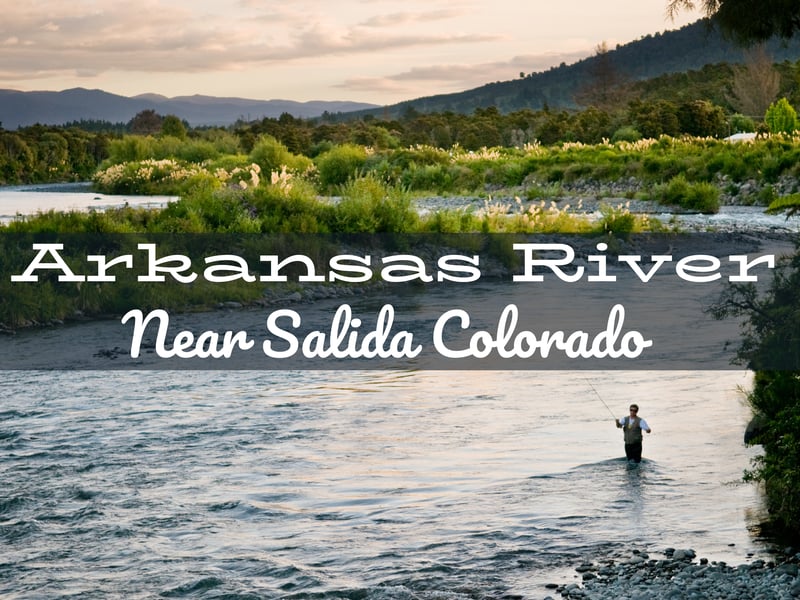
Arkansas River Fly Fishing Report Buena Vista and Salida
%20(3).png?width=600&height=131&name=Guide%20Rating%20(800%20x%20175%20px)%20(3).png)
Bighorn Sheep Canyon is the strongest all-around Arkansas choice right now. It has enough volume and structure to fish well as flows rise, and it gives both wade and float anglers more options than the upper river when conditions start changing.
This is where the Arkansas feels most “May” in the best way: caddis activity, fishable edge water, good boat lanes, and enough stain at times to make fish less suspicious. It is still a timing game, but the margin for error is better here than in skinnier upper sections.
Top Flies for the Month of May
Primary Method: Nymphing | Primary Hatch: Midges
| Priority | Fly + Size | Role & When to Use |
|---|---|---|
| ⭐⭐⭐⭐⭐ | Graphic Caddis #14–16 | Best caddis anchor in riffles and edges |
| ⭐⭐⭐⭐⭐ | Duracell Jig #14–16 | Gets down fast in pushy seams |
| ⭐⭐⭐⭐ | Pat’s Rubber Legs #8–10 | Big profile in pocket water and stain |
| ⭐⭐⭐⭐ | Elk Hair Caddis #14–16 | Surface or dry-dropper option |
| ⭐⭐⭐⭐ | Thin Mint #6–8 | Streamer for banks and cloudy windows |
| ⭐⭐⭐⭐ | Frenchie #14–16 | Confidence nymph across mixed water |
| ⭐⭐⭐ | Mini Dungeon #4–6 | Larger movement profile during flow bumps |
| ⭐⭐⭐ | Flashback Pheasant Tail #14–16 | Natural profile with subtle flash |
| ⭐⭐⭐ | Rainbow Warrior #16–18 | Visibility boost when clarity drops |
| ⭐⭐ | Barr’s Emerger #16–18 | BWO activity in soft seams |
Pro Rig of the Month
Bighorn Caddis Edge Rig
- Indicator: Medium yarn indicator or larger dry-dropper setup
- Lead Fly: Pat’s Rubber Legs #8
- Dropper: Graphic Caddis #14
- Weight: Moderate, adjusted by edge depth
- Spacing: 12–18 inches
- Target Water: Bank seams, soft edges, riffle shelves, and water below faster current
Access Points
Browns Canyon National Monument ⭐⭐⭐⭐⭐
Prime winter structure with consistent depth and sun exposure.
Salida Town Stretch ⭐⭐⭐⭐☆
Reliable winter runs close to amenities.
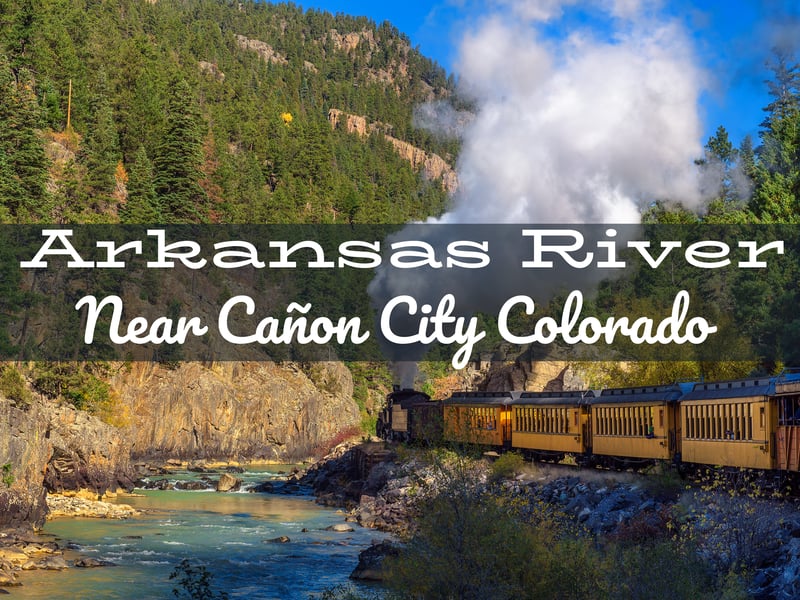
Arkansas River Fly Fishing Report Near Cañon City
The Pueblo Tailwater is the insurance policy. When the upper and middle Arkansas get too high, stained, or inconsistent, Pueblo gives you controlled flows, technical nymphing, and a more stable option.
That does not mean easy. Fish here see pressure, and the water can be technical, but the tailwater is usually more predictable than the freestone sections during May. If the main river starts losing clarity, Pueblo quickly becomes the smart play.
Top Flies
| Priority | Fly + Size | Role & When to Use |
|---|---|---|
| ⭐⭐⭐⭐⭐ | Black Beauty #20–22 | Clean midge profile for pressured fish |
| ⭐⭐⭐⭐⭐ | Juju Baetis #20 | Baetis anchor during feeding windows |
| ⭐⭐⭐⭐ | Barr’s Emerger #18–20 | Strong BWO transition pattern |
| ⭐⭐⭐⭐ | CDC RS2 #20 | Suspended fish in softer seams |
| ⭐⭐⭐⭐ | Zebra Midge #20–22 | Reliable tailwater dropper |
| ⭐⭐⭐ | Chocolate Foam Wing Emerger #20 | Subtle emergence profile |
| ⭐⭐⭐ | Mercury Baetis #20 | Cleanup fly for selective fish |
| ⭐⭐⭐ | Rainbow Warrior #18–20 | Visibility option if water tints |
| ⭐⭐ | Graphic Caddis #16–18 | Caddis activity in the right window |
| ⭐⭐ | Thin Mint #8–10 | Change-up streamer in deeper runs |
Pro Rig of the
Month
Pueblo Tailwater Technical Baetis Rig
-
- Indicator: Small yarn indicator
- Lead Fly: Juju Baetis #20
- Dropper: Black Beauty #22
- Weight: Light split shot, adjusted carefully
- Spacing: 14–18 inches
- Target Water: Seams, shelves, slower runs, and depth transitions
Access Points
Leadville Tailwater | 📍 Locals Rating ⭐️⭐️⭐️⭐️ 4.0
Cold clear water with defined winter seams.
Salida Whitewater Park | 📍 Locals Rating ⭐️⭐️⭐️⭐️ 4.0
Urban access with productive winter edges.
Lower Bighorn Sheep Canyon | 📍 Locals Rating ⭐️⭐️⭐️⭐️⭐️ 5.0
Broad seams and consistent winter holding water.
Canon City Reach | 📍 Locals Rating ⭐️⭐️⭐️⭐️ 4.0
Warmer stretch with steady winter action.
Parkdale Tailouts | 📍 Locals Rating ⭐️⭐️⭐️⭐️ 4.0
Defined slow banks and seams.
Texas Creek Section | 📍 Locals Rating ⭐️⭐️⭐️ 3.5
Large water requiring careful positioning.
Cottonwood Bend | 📍 Locals Rating ⭐️⭐️⭐️⭐️ 4.0
Broad seams and depth changes.
Rincon Reach | 📍 Locals Rating ⭐️⭐️⭐️⭐️ 4.0
Defined winter holding lanes.
Wellsville Stretch | 📍 Locals Rating ⭐️⭐️⭐️ 3.5
Less pressure but broader water.
Browns Canyon Stretch | 📍 Locals Rating ⭐️⭐️⭐️⭐️⭐️ 5.0
Defined pocket water with reliable winter depth.
Hecla Junction | 📍 Locals Rating ⭐️⭐️⭐️⭐️ 4.5
Structured seams and tailouts.
Salida East Access | 📍 Locals Rating ⭐️⭐️⭐️⭐️ 4.0
Consistent winter structure.
Local Regulations and Notes on LandOwner Rights
Artificial flies and lures only in most sections
Respect private property near agricultural stretches
Be cautious around ice shelves and slick banks
FAQ
Is the Arkansas River good for fly fishing in winter?
Yes. The middle and lower sections fish best, while upper sections are more technical.
Where is the most consistent winter fishing?
The Buena Vista to Salida corridor offers the best balance of flow, temperature, and structure.
Are dry flies an option?
Rarely. Subsurface midge patterns dominate.
What tippet works best?
5X in most water, dropping to 6X in clear slow sections.
Which Arkansas section fishes best in winter?
The Middle Arkansas offers the best balance of access and consistency.
Do I need different flies by section?
No. Depth and drift matter more than fly changes.
Is the Arkansas crowded in winter?
Upper and Middle see moderate pressure. Lower remains quieter.
Companion Article for December
.png)